


Organising
How to Organise a Corporate Beach Cleanup Day
A corporate cleanup day is straightforward to organise and easy to organise badly. The parts that decide how it goes are settled weeks beforehand: who owns the beach, who carries the insurance, how many people the site can actually hold, and whether the work is real or staged for the photographs.
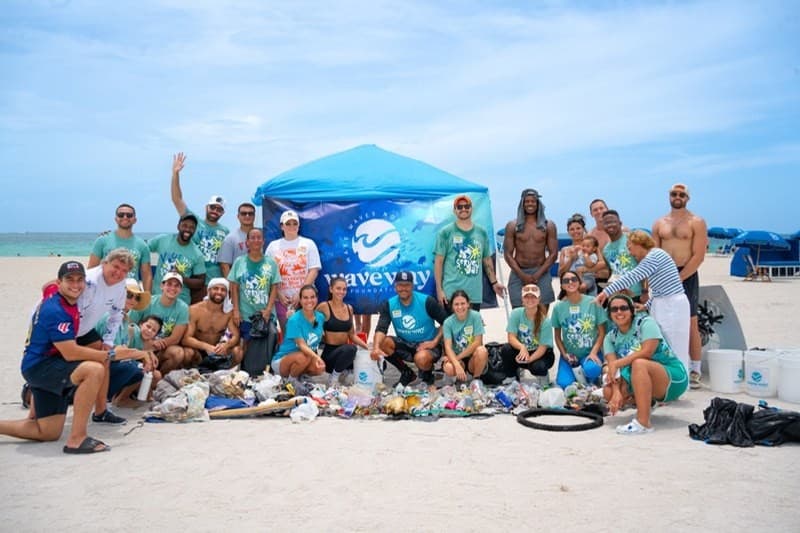
What does a company need to arrange first?
Three things, in order: permission from whoever manages the beach, a waste disposal route agreed in advance, and confirmation of who carries liability for the volunteers. Everything else is logistics. Booking a date before these are settled is how corporate days fall apart.
Permission is specific to the stretch of shoreline, not the city. Municipal beaches, county parks and state or national parks each run their own process, and an organised group of thirty is a different proposition to them than two people with a bucket. Some require a permit for any organised activity.
Disposal is the question that gets forgotten and then becomes acute at noon with forty full bags. Ask the land manager how collected waste should leave the site, and whether they will take it or you must.
Liability is the one a company's own operations or legal team will care about most. Are volunteers covered under the employer's policy, does the host organisation carry cover, and is a waiver required. Settle it before invitations go out, not after.
Only then pick a date, and pick it against the tide table and the season rather than against the office calendar alone.
How many people should a corporate group be?
Fewer than most companies propose. A shoreline has a finite working length, and beyond roughly thirty to forty people on a typical urban beach section the group starts competing for the same debris. Splitting a large team across sections or across two dates works better.
The binding constraint is the length of productive shoreline, primarily the wrack line and the structural edges. That is a linear resource, and it does not expand because more people arrived.
For a large team, the options are to spread along a longer stretch with section leads, to split across two dates, or to run parallel activities: collection, sorting and recording, and a short educational segment rotating in groups.
There is a supervision ratio to respect too. Someone has to brief, watch for heat, handle a sharps find and answer questions. One organiser to roughly fifteen volunteers is a workable ratio; one to sixty is not.
If a company wants a large-team event, be honest with them that a shorter session for a smaller group does more real work, and that the remainder of the team can be given a different useful task rather than a shovel they do not need.
What should the company supply?
Buckets or heavy bags, gloves in more than one size, a rigid sharps container, a first aid kit, shade, and drinking water with a refill point. Corporate groups arrive dressed for an office, so spare sun protection and a clear kit list in the invitation matter more than usual.
The kit list for a corporate day is the same as any cleanup, with one difference: the participants did not choose to come, and a proportion will arrive unprepared.
Send the kit requirements with the invitation, not on the morning. Closed-toe shoes and clothes that can be ruined are the two that people get wrong, and both are unfixable once someone is standing on sand in office shoes.
Supply gloves in at least two sizes and more pairs than headcount. Coated garden gloves outperform disposable nitrile on every measure that matters here, and disposable gloves at a plastic cleanup is a contradiction that participants notice.
Shade and water are the difference between a group that finishes and a group that thins out after forty minutes. In a Miami summer this is a safety requirement rather than a comfort.
Reusable buckets beat bags for corporate groups specifically, because they do not tear on the sharp items an inexperienced volunteer will pick up, and because they stack afterwards instead of becoming waste.
- Buckets or heavy-duty bags, more than headcount
- Coated garden gloves in at least two sizes
- A rigid, lidded sharps container
- A first aid kit and a named person responsible for it
- A shade tent and a water refill point
- Spare hats and sunscreen for people who arrive without
- A scale and a recording sheet, if you intend to log what was found
When should a corporate cleanup be scheduled?
Early morning, on a falling tide, outside the hottest part of the day, and ideally after a period of onshore wind. Ninety minutes to two hours of collection is the working window. Anything longer in open sun reduces output and raises the risk of a heat incident.
Morning wins on three counts at once: heat load is lowest, the overnight tide has just deposited a fresh strandline, and the beach is empty enough for a group to work without going around sunbathers.
A falling tide exposes the working zone and keeps widening it while you work. A rising tide does the opposite and pushes the group up the beach into the drier, less productive sand.
Build the schedule with a hard finish time and honour it. Corporate participants have the rest of a working day, and an event that overruns is remembered for that rather than for the work.
How do you make it more than a photo opportunity?
Give the work a result the participants can see, and be honest about its size. Recording what was collected by category, spending ten minutes explaining where the material came from, and naming what the day did not solve all convert an outing into something people act on afterwards.
The cynicism about corporate volunteering days is earned, and the way to answer it is not to avoid photographs. It is to make sure there is something real underneath them.
Recording by category rather than only by weight is the highest-value addition. Weight is dominated by whatever heavy thing someone found. Counts of wrappers, caps, filters and bottles show a team the composition of the problem, and that is the thing people remember at their next purchasing decision.
Ten minutes of explanation changes the frame. Most participants have never been told that shoreline litter is mostly land-based, that it arrives through storm drains, or that a bottle removed today prevents thousands of fragments. That is a short talk and it is the part that travels.
Say clearly what the day did not do. A cleanup does not solve ocean plastic, it removes a quantity of material and shows a group what is in the sand. Overselling it is what makes the whole exercise read as performance.
The follow-up matters more than the day. A single event with no next step is a morning out. An event followed by a specific, dated invitation to the next one is the start of something.
If a company wants a lasting contribution, the unglamorous answers are usually better: funding supplies for events that were going to happen anyway, lending skills the organisation does not have, or changing something in its own operations that generates waste.
What should a company ask a host organisation?
Whether they have permission for the site, how waste will be disposed of, what insurance and waivers apply, what the maximum workable group size is, what the company needs to bring, and what the organisation will do with any record of what was collected.
Permission and disposal are the two that most often reveal an inexperienced host. If neither has been arranged, the company is taking on risk it has not priced.
On insurance, ask specifically who is covered and by whom, and get the waiver in advance so participants are not signing something on a phone in a car park.
Ask about maximum group size and take the answer seriously, especially if it is smaller than you hoped. A host willing to say thirty rather than take a booking for eighty is being straight with you.
Finally, ask what happens to the record. A group that weighs and categorises its haul and then discards the number has done half the work. A group that contributes it to a wider dataset has done all of it.
Frequently Asked Questions
Does a company need a permit for a beach cleanup?
Often, and it depends entirely on who manages that stretch of shoreline. Municipal, county, state and national sites each run their own process, and organised group activity is frequently treated differently from individual use. Ask the managing authority before publicising a date.
How long should a corporate cleanup run?
Ninety minutes to two hours of active collection, plus a briefing and a close-out. Longer sessions in open sun collect less per hour as attention drops and materially raise the risk of a heat incident.
Is a beach cleanup a good team-building activity?
It works well because the task needs no skill, everyone starts equal, and progress is visible within minutes. It works badly if the group is too large for the site, because most of the team ends up standing around watching a few people work.
What is the most useful thing a company can contribute?
Usually not the labour. Funding supplies, covering permit and disposal costs, lending professional skills, or changing something in its own packaging and waste practices all outlast a single morning on a beach.
Sources
- Ocean Conservancy, International Coastal Cleanup
- Volunteer Florida, Volunteer Florida
- NOAA Marine Debris Program, NOAA Marine Debris Program
Written by
The Humanity Cares team
Humanity Cares is a Miami 501(c)(3) that runs beach cleanups and cultural activations. This is general background reading on a subject the foundation works in. It describes no specific Humanity Cares event, and every figure in it is either attributed to a named organisation or left unstated.
Keep Reading
Local ecology
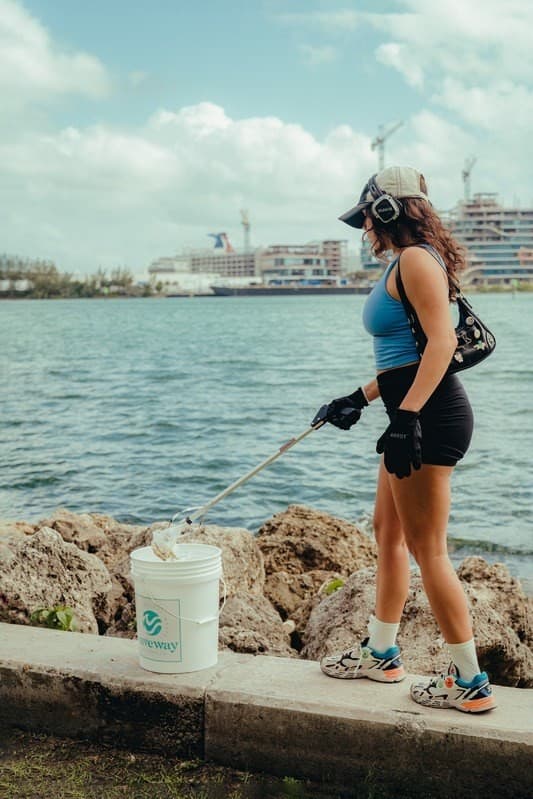
Beach Cleanups During Sea Turtle Nesting Season
Sea turtles nest on South Florida beaches for most of the year. What that means for where volunteers can walk, what they must not touch, and why beach lighting matters more than litter on some nights.
8 min read
Local ecology
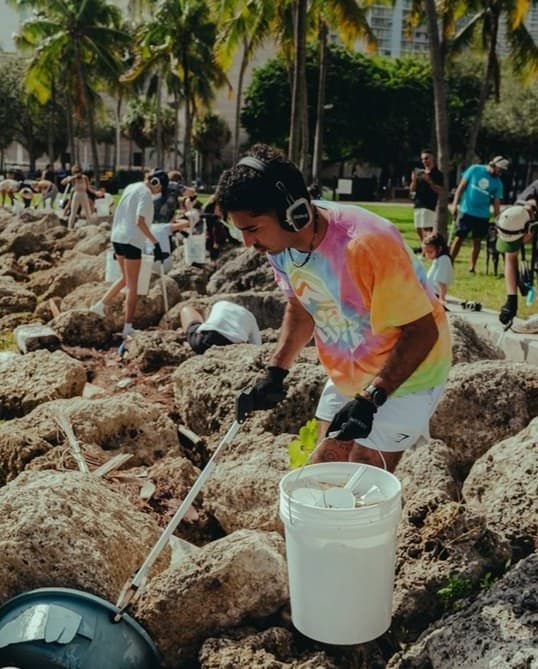
Sargassum on South Florida Beaches, and What Volunteers Should Do About It
The brown seaweed that piles up on South Florida beaches is habitat, not rubbish. Why it arrives, why it smells, what it traps, and the one job volunteers should actually be doing when it is there.
8 min read

Field guide
How to Run a Beach Cleanup Safely
Permissions, the safety briefing, what volunteers should never pick up, how to handle sharps and wildlife, and how to close out a cleanup properly. Written for whoever is organising, not attending.
8 min read