


Local ecology
King Tides in Miami, and Why They Matter to a Beach Cleanup
A king tide is the highest predicted tide of the year, produced by ordinary astronomy rather than by weather. In low-lying coastal cities it can flood streets on a cloudless day, push seawater back up through storm drains, and reach debris that ordinary tides never touch. It is predictable, which makes it useful to plan around.
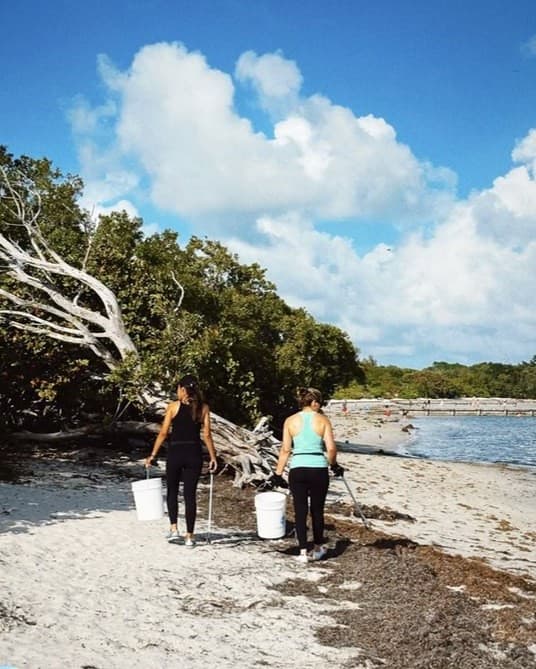
What is a king tide?
A popular, non-scientific name for the highest tides of the year. NOAA describes these as perigean spring tides: the alignment of the sun and moon that produces spring tides, coinciding with the moon at its closest approach to Earth. The result is a larger than usual tidal range.
Two separate astronomical factors stack, and when they line up you get the year's extremes.
Spring tides have nothing to do with the season. They occur around the new and full moon, when the sun and moon are aligned and their gravitational pull on the ocean combines, producing higher highs and lower lows roughly twice a month.
The second factor is the moon's orbit, which is not a perfect circle. At perigee, its closest point to Earth, its tidal pull is stronger. When perigee coincides with a new or full moon, the effect compounds.
Because both are orbital mechanics, king tides are predicted years in advance. This is the crucial practical point: unlike a storm, the dates are on a calendar, and NOAA publishes tide predictions accordingly.
In South Florida they are most often noticed in the autumn, when seasonal factors including water temperature and prevailing currents raise the baseline sea level that the tide sits on top of.
Why does Miami flood on a sunny day?
Because the water arrives from below and behind rather than from rainfall. Much of the region sits barely above sea level on porous limestone, and a high enough tide pushes seawater up through the ground and back through stormwater outfalls into streets, with no rain involved.
Sunny day flooding, also called nuisance or high tide flooding, is the phenomenon that most surprises people who have not seen it. Standing water on a street under a blue sky reads as a broken pipe rather than a tide.
The geology is a large part of it. South Florida sits on porous limestone, which means groundwater and seawater move through the rock. A sea wall stops water going over the top; it does nothing about water coming up underneath.
Stormwater infrastructure is the other half. Drains are built to carry water downhill to an outfall. When the sea at the outfall is higher than the street, the gradient reverses and the drain becomes an inlet.
NOAA tracks how often this kind of flooding happens through its high tide flooding programme, and the direction of travel is toward more frequent events as baseline sea level rises. A tide that would have been unremarkable decades ago now reaches the road.
For anyone working on a shoreline, the practical implication is that the highest tides now reach further inland than the historic high water mark suggests, which is exactly where the older, most weathered debris sits.
What do king tides do to litter and debris?
They redistribute it in both directions. Water reaching further inland lifts debris that has sat above the ordinary tide line for months, and the retreat carries it seaward. Backflow through storm drains can also push accumulated street litter out onto the surface.
This is the connection between an astronomical curiosity and a bag of rubbish, and it works in both directions at once.
Going in, the water reaches material that ordinary tides never touch: debris lodged at the back of a beach, in vegetation, against a seawall, or high in mangrove roots. Much of that is the oldest and most embrittled plastic on the shoreline.
Coming out, the same water carries a proportion of it seaward. A king tide can move months of accumulated debris into the water over the course of a couple of days.
The storm drain effect works the opposite way. Where seawater backs up through the system, it can carry accumulated street litter out of the drain and onto the road surface, which is at least visible and collectable.
For an organiser this makes the days just before a predicted king tide unusually valuable. Debris removed from the back of a beach in that window is debris the tide does not get to take.
How do king tides affect mangroves and shorelines?
They push debris deeper into places it cannot easily be recovered from. Water reaching further into a mangrove fringe carries floating material into the root tangle and strands it above the ordinary waterline, where routine tides will not release it again.
Mangroves are the clearest case, because they trap what they catch and rarely give it back.
An ordinary high tide reaches the outer fringe. A king tide reaches past it, into the interior of the stand, and leaves plastic hung on roots at a height that only the next comparable tide will reach.
That material then sits in the root system weathering and fragmenting, in a place that is difficult to access and easy to damage while trying.
Erosion is the second effect. Higher water attacking a shoreline for longer moves sand, undercuts scarps and stresses vegetation, and a beach that has already lost its dune buffer has less to absorb it.
This is one of the practical arguments for mangroves and dune vegetation as infrastructure rather than scenery. The parts of a coastline with an intact natural buffer absorb these events; the hardened parts pass the energy along.
How should a cleanup work around king tides?
Check the tide predictions when picking a date, not the day before. Work the back of the beach ahead of a predicted king tide and the fresh strandline just after one. Avoid scheduling on the peak day itself, when access is poor and parking may flood.
Tide tables are free, published years ahead, and almost never consulted by people organising volunteer events. That is an easy advantage to take.
Before a predicted king tide, the priority is material sitting high on the beach and in back-of-beach vegetation. That is the stuff about to be mobilised, and removing it is the difference between it going into the bay and not.
After one, the priority is the fresh strandline, which will be higher up the beach than usual and unusually rich, because the tide has redistributed material that had been static for months.
The peak day itself is a poor choice. Access roads and car parks may flood, the working beach is narrow, and volunteers arriving to standing water tend not to come back.
Documenting what you see is genuinely valuable during these events. Several coastal monitoring efforts collect public photographs of high tide flooding to build a record of where water actually reaches, and a photograph with a location and timestamp is a real contribution.
Are king tides the same as sea level rise?
No, but they are related. King tides are a natural, predictable cycle that has always occurred. Sea level rise raises the baseline those tides sit on, so the same astronomy produces higher water than it used to and reaches places it previously did not.
Conflating the two is common in both directions, and both errors are worth correcting.
The first error is treating king tides as evidence of sea level rise by themselves. They are not. They happened long before any modern change and would happen without it.
The second is dismissing them as merely natural and therefore unremarkable. That misses the interaction. Because the baseline is higher, a tide of a given astronomical size now floods streets that stayed dry within living memory.
This is why king tides get used as a public illustration. They are a preview: the water level a king tide reaches today is closer to what an ordinary high tide may reach later, which makes an abstract projection something people can stand in.
For a shoreline organisation the practical reading is that the zone where debris accumulates is moving landward. Cleanup routes drawn from where the strandline used to sit will increasingly miss it.
Frequently Asked Questions
When do king tides happen in South Florida?
They occur around new and full moons when the moon is near its closest approach, and are most often noticed in the autumn, when seasonal conditions raise the baseline water level. The dates are predicted years ahead in published tide tables.
Is the flooding during a king tide seawater or rainwater?
Seawater, which is why it can happen with no rain at all. It arrives through porous ground and by backing up through stormwater outfalls when the sea is higher than the street the drain serves.
Is it safe to walk or drive through king tide flooding?
Treat it with the same caution as any standing water. It can conceal open drains and kerbs, it is saltwater and corrosive to vehicles, and it may carry contamination from whatever the street held before it flooded.
Does a king tide make a beach cleanup pointless?
The opposite. It makes timing matter. Debris removed from the back of a beach before a predicted king tide is debris that never reaches the water, and the fresh strandline afterwards is unusually concentrated.
Sources
- NOAA National Ocean Service, What is a king tide?
- NOAA Tides and Currents, High Tide Flooding
- NOAA Office for Coastal Management, Florida
- Miami-Dade County, Biscayne Bay
Written by
The Humanity Cares team
Humanity Cares is a Miami 501(c)(3) that runs beach cleanups and cultural activations. This is general background reading on a subject the foundation works in. It describes no specific Humanity Cares event, and every figure in it is either attributed to a named organisation or left unstated.
Keep Reading
Ocean literacy
Where Beach Litter Actually Comes From
Most of what strands on an urban shoreline never came off a boat. It came off a street. How stormwater, wind and tides move litter from inland to the waterline, and what that means for where you clean.
8 min read
Local ecology
Beach Cleanups During Sea Turtle Nesting Season
Sea turtles nest on South Florida beaches for most of the year. What that means for where volunteers can walk, what they must not touch, and why beach lighting matters more than litter on some nights.
8 min read
Local ecology
Sargassum on South Florida Beaches, and What Volunteers Should Do About It
The brown seaweed that piles up on South Florida beaches is habitat, not rubbish. Why it arrives, why it smells, what it traps, and the one job volunteers should actually be doing when it is there.
8 min read