


Field guide
What to Bring to a Beach Cleanup
Almost everything you need for a beach cleanup you already own. The kit that matters is closed-toe shoes, water you can refill, sun protection, and gloves that fit. Everything beyond that is a preference, and a few popular items actively make the morning worse.
What should every volunteer bring?
A refillable water bottle, sun protection you can reapply, closed-toe shoes, and clothing you do not mind ruining. Those four cover the risks that actually materialise on a shoreline: dehydration, sunburn, cut feet, and the discovery that beach litter is filthy.
Start with the water bottle, because it is the item with the highest consequence if it is missing. Two hours of physical work in open sun without water is how a pleasant morning becomes a medical incident, and a disposable bottle at a plastic cleanup is a bad look nobody needs to explain.
Sun protection means a hat and a shirt as much as it means sunscreen, because fabric does not wear off after ninety minutes. Reapplication is the part people skip.
Closed-toe shoes are the one non-negotiable that gets argued about. Sandals feel right on a beach and are wrong for this. The whole activity involves moving toward sharp objects rather than away from them, and broken glass sits in sand at exactly ankle height.
Wear clothes you would garden in. The wrack line is wet, it smells, and it stains. Nobody enjoys spending a cleanup trying to keep clean.
- A refillable water bottle, filled before you arrive
- A wide-brim hat and a light long-sleeve shirt
- Reef-conscious sunscreen you will actually reapply
- Closed-toe shoes with a solid sole
- Clothes you do not mind staining
- A small towel, and a bag for wet or dirty clothes afterwards
What gloves work best on a beach?
Reusable garden gloves with a coated palm are the best general answer. They resist punctures far better than disposable nitrile, they grip wet items, and they can be washed and used again. Disposable gloves at a plastic cleanup are both weaker and self-defeating.
Glove choice gets underestimated. The difference between the right and wrong pair is the difference between picking up a jagged can lid confidently and leaving it in the sand.
Coated garden gloves, the kind with a nitrile or latex palm over a fabric back, are cheap, breathable enough for heat, and durable. They handle wet, gritty items without slipping.
Thin disposable gloves tear on the first sharp edge and give a false sense of protection while doing so. They also add a disposable plastic item to an event about disposable plastic items, which volunteers notice.
Fit matters more than material. A glove too large snags and slips; too small and people take them off within twenty minutes. If an organiser is supplying gloves, supplying one size is the most common mistake.
What should organisers supply rather than volunteers?
Bags or buckets, a rigid sharps container, a first aid kit, shade, and drinking water for refills. These are shared safety infrastructure. Expecting each volunteer to arrive with their own is how a cleanup ends up with none of it.
There is a clean division between personal kit and event kit, and getting it wrong is the usual cause of a chaotic start.
Collection containers should come from the organiser so they are consistent, adequate in number, and disposed of together. Reusable buckets beat bags for most shoreline work: they do not tear on sharp items, they stand up on their own, and they can be tipped into a single collection point.
A rigid sharps container is not optional, even on a beach where sharps are unlikely. So is a first aid kit with the basics for cuts and for heat, and someone who knows where it is.
Shade and a water refill point are what make a two-hour event finish with the same number of people it started with. A pop-up tent and a cooler of water is a small investment against the single most likely incident of the day.
- Buckets or heavy-duty bags, more than you think you need
- A rigid, lidded sharps container
- A first aid kit, and a named person who knows where it is
- Shade, and a water refill point
- Spare gloves in at least two sizes
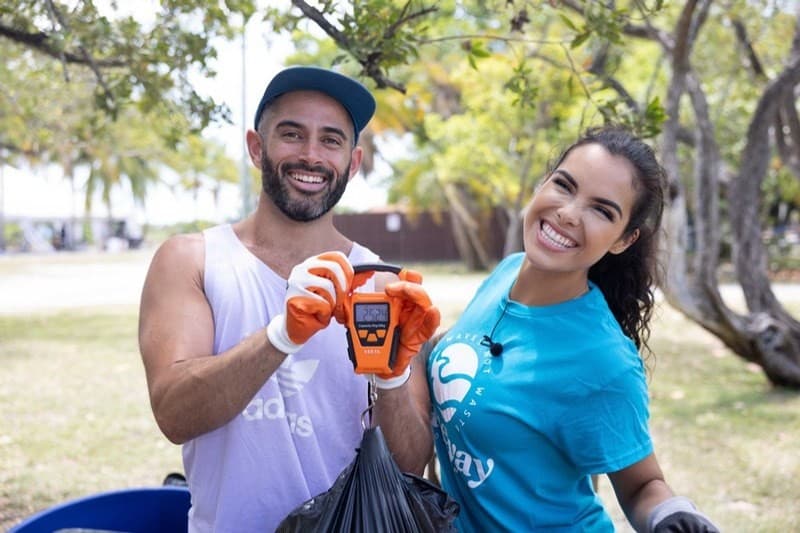
- A scale, if you intend to record what was collected
Are litter pickers worth it?
For some people and some terrain, yes. They save backs, keep hands away from sharp items, and help anyone who cannot crouch repeatedly. On soft dry sand and for small items like bottle caps and filters they are slower and clumsier than a gloved hand.
Litter pickers are the most requested piece of gear and the most situational. They are excellent along seawalls, in rocky sections, in vegetation you should not be reaching into, and for anyone whose knees would otherwise cap their participation at thirty minutes.
They are frustrating for the small stuff. Cigarette filters, bottle caps, fragments of hard plastic and foam pellets all defeat a grabber on loose sand, and those items make up a large share of what is actually there.
The practical answer is to have some, not to have one per person. A handful shared across a group, offered first to whoever wants one, covers the real need without the cost.
If you are buying, the sturdier hinged models last considerably longer than the cheapest ones, which tend to fail at the trigger within a season of salt exposure.
What should you leave at home?
Sandals, single-use water bottles, disposable gloves, anything valuable you would be upset to lose in sand, and heavy tools you have not been asked to bring. Each of these either creates a hazard, contradicts the point, or becomes someone else's problem.
Sandals and flip flops are the leading cause of a preventable injury at this kind of event, and the argument for them is only that they are what people wear to a beach normally. This is not a normal visit to a beach.
Single-use bottles and disposable gloves are the obvious contradictions. They also generate waste at a site where waste disposal is already the day's logistical constraint.
Leave valuables behind or keep them zipped away. Phones go into sand, keys disappear, and a beach at low tide is a very large place to search.
Do not bring rakes, sieves or shovels unless the land manager has asked for them. Sifting sand damages the organisms living in it and is not what the morning is for.
How do you dress for Miami heat specifically?
Cover up rather than strip down. Light, loose, long-sleeved fabric shades skin all morning where sunscreen degrades. Add a wide-brim hat, sunglasses, and a plan to drink before you feel thirsty. Humidity means sweat evaporates poorly, so cooling is slower than the temperature suggests.
Subtropical heat is a different problem from dry heat, and the instinct to wear as little as possible works against you on both sun exposure and cooling.
Loose long sleeves in a light colour are more comfortable than bare arms once the sun is up, and they protect the areas people most often miss with sunscreen. A wide brim covers ears and the back of the neck, which a cap does not.
Because humidity slows evaporative cooling, the body sheds heat less efficiently than the air temperature implies. That means drinking on a schedule rather than on thirst, and taking shade breaks before anyone feels they need one.
If a cleanup is running into late morning, the organiser should be watching for the early signs of heat exhaustion in the group rather than relying on individuals to raise their hand. People working in a group tend not to stop.
Frequently Asked Questions
Do I need to bring my own bags?
Usually not, and you should check rather than assume. Most organised cleanups supply collection containers so that everything ends up in one disposal stream. Bringing your own is only helpful if the organiser has asked for it.
Is reef-safe sunscreen actually different?
Formulations marketed as reef-conscious typically avoid certain chemical UV filters in favour of mineral ones. Regulations vary by jurisdiction and the science on specific ingredients continues to develop. Either way, a hat and a shirt reduce the amount of any sunscreen you need.
What if I can't crouch or walk on soft sand?
Say so when you sign up. A grabber tool, a section of firmer sand or a boardwalk area, or a role at the sorting and weigh-in point are all normal accommodations, and a well-run cleanup will have thought about them before you ask.
Can I bring my dog?
That depends on the beach, not on the cleanup. Many shorelines restrict dogs entirely or seasonally, particularly where there are nesting closures. Check the rules for that specific beach before assuming.
Sources
- Ocean Conservancy, International Coastal Cleanup
- Surfrider Foundation, Programs
- US Food and Drug Administration, Sunscreen: How to Help Protect Your Skin from the Sun
Written by
The Humanity Cares team
Humanity Cares is a Miami 501(c)(3) that runs beach cleanups and cultural activations. This is general background reading on a subject the foundation works in. It describes no specific Humanity Cares event, and every figure in it is either attributed to a named organisation or left unstated.
Keep Reading

Field guide
How to Run a Beach Cleanup Safely
Permissions, the safety briefing, what volunteers should never pick up, how to handle sharps and wildlife, and how to close out a cleanup properly. Written for whoever is organising, not attending.
8 min read
Field guide
Sun and Heat Safety for a Morning on an Open Beach
A shoreline has no shade, reflects light off sand and water, and gets hot fast. What that means for timing, clothing, water and knowing when to stop.
8 min read
Volunteering
Taking Children to a Beach Cleanup
What age a child can usefully take part, the safety rules that matter more with younger volunteers, how long to stay, and how to talk about the problem without leaving a seven year old frightened.
8 min read