


Local ecology
How Hurricane Season Moves Debris Onto Miami's Shoreline
A hurricane does not manufacture marine debris. It takes waste that was already sitting in streets, yards, canals and storage and moves an enormous quantity of it in a few hours. That is why shorelines look worse after a storm, and why post-storm cleanup is a different and more hazardous activity than an ordinary Saturday morning.
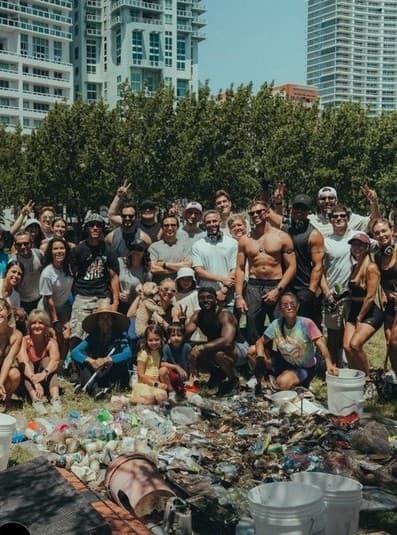
Where does post-storm beach debris come from?
Overwhelmingly from land. Rainfall flushes storm drains at volumes they were never built to filter, surge pushes water inland and drags material back out, and wind lifts anything unsecured. The result is a single enormous delivery of ordinary land-based waste to the shoreline.
The composition of what strands after a storm tells the story. Alongside the usual bottles and packaging come fence panels, roofing material, pool equipment, garden furniture, plant pots, insulation foam and construction offcuts.
None of that came off a boat. It came off properties, out of yards, from building sites, and from waste awaiting collection.
Storm drains do the bulk of the work. In most coastal cities stormwater is untreated and discharges to canals and the bay, so a system designed to move rainfall off streets fast becomes a delivery pipe for whatever the rain picks up.
Surge adds a mechanism that ordinary rain does not. Water pushed inland and then withdrawing carries material seaward that was never near a drain, including large and heavy items.
Wind accounts for the lightweight fraction. Foam in particular travels a long way on very little breeze, which is why polystyrene fragments show up in quantity after a windy system that produced little rain.
Why does a storm make the plastic problem worse for years?
Because it converts a large amount of contained waste into uncontained waste in a single event. Material that was in a bin, a yard or a building becomes debris in water, and from that point it follows the ordinary path: weathering, embrittlement and fragmentation into pieces nobody can collect.
The immediate visible mess is not the lasting part. The lasting part is the fraction that does not strand where anyone can reach it.
Some material sinks. Some drifts offshore. Some lodges deep in mangrove root systems where it will sit for years. All of it continues weathering, and all of it continues shedding fragments.
Foam is the worst case. A single sheet of expanded polystyrene insulation that reaches the water breaks into an effectively uncountable number of beads, and no cleanup recovers them.
This is the argument for moving quickly after a storm rather than waiting for the beach to look presentable again. Intact items are collectable; the same items after weeks of sun and surf are not.
It is also the argument for the boring preparation work. Securing loose material before a storm prevents more debris than any amount of collection afterwards recovers.
What can residents do before a storm?
Secure or bring in anything loose, and do not put waste out for collection when a storm is forecast. Bins, bags, furniture, pots and building materials left outside become airborne or waterborne debris. This is the highest-leverage thing an individual can do about post-storm marine litter.
Preparation guidance from emergency management bodies focuses on life safety first, which is correct. The debris consequences are a secondary benefit of the same actions.
Waste collection schedules are typically suspended ahead of a storm, and material already at the kerb has nowhere to go. Holding it indoors or in a garage until collection resumes keeps it out of the water.
Anything that can be lifted by wind should be brought inside or tied down: bins, garden furniture, umbrellas, plant pots, decorations, building materials, and equipment left on balconies.
Storm drains near a property are worth clearing of leaves and litter beforehand. A blocked drain floods, and floodwater picks up more than a functioning drain would have carried.
For anyone with a boat, dock or waterfront property, securing gear, lines and floating equipment matters disproportionately, because that material goes straight into the water rather than travelling there.
The National Hurricane Center and Ready.gov both publish preparation guidance, and the parts about securing outdoor items are the parts that determine what ends up on a beach a week later.
Is post-storm cleanup safe for volunteers?
Less so than routine cleanup, and it should not be treated as the same activity. Post-storm debris includes heavy construction material, exposed nails, damaged electrical equipment, chemical containers and sharp metal, and it may sit on unstable, eroded or undercut sand.
The hazard profile changes completely after a storm, and a group briefed for an ordinary cleanup is briefed for the wrong event.
The material is heavier and sharper. Timber with protruding nails, torn roofing, broken glass in quantity, twisted metal and shattered fibreglass are all common, and none of it belongs in a bag lifted by hand.
There may be hazards that require an agency rather than a volunteer: fuel and chemical containers, propane cylinders, damaged electrical equipment, downed lines, and displaced wildlife including snakes and stinging insects.
The ground itself can be unsafe. Storm erosion undercuts sand, scarps collapse, and structures that look intact may not be. Standing water may be contaminated by sewage overflow.
The correct sequence is to wait for the land manager and emergency services to declare an area open, then run a smaller, better-equipped group than usual, with heavier gloves, closed sturdy footwear, a rigid sharps container and an explicit rule about what nobody touches.
If the honest answer is that a site needs machinery and trained crews, that is the answer. A volunteer group arriving early into a hazardous site creates casualties and gets in the way of the people who can actually clear it.
How does post-storm debris get handled differently?
Through a separate waste stream. Counties typically run dedicated storm debris collection with sorted categories, often household waste, appliances, vegetation, and construction and demolition material kept in separate piles. Mixing them can mean a pile is not collected at all.
This is the part that turns a well-meaning cleanup into an unresolved heap on a kerb, and it is entirely avoidable by asking one question first.
Miami-Dade County, like most large counties, publishes storm debris guidance that separates material into distinct categories for collection. The separation exists because each stream goes somewhere different.
For a volunteer group the implication is that you cannot simply fill bags. Vegetation, construction material, appliances and general waste need to end up in different places, and the collection point may not be the beach access you parked at.
Confirm the route before you start. Who is collecting, from where, in what categories, and by when. A pile left on a public beach for a week is a hazard and a reputational problem.
Bulky items that cannot be moved by hand are a reporting job rather than a collection job. Record the location and pass it to the land manager.
When is the right time to run a post-storm cleanup?
After the authorities have reopened the area and before the debris weathers and fragments. That window is usually days rather than weeks. Going in too early is dangerous and obstructive; waiting too long means collecting fragments instead of intact items.
There is a real tension here and it is worth naming rather than pretending the answer is obvious.
Going early feels urgent and useful and is usually wrong. Emergency services, utility crews and county contractors need access, sites are unstable, and a volunteer group is at best an obstruction.
Waiting too long has a genuine cost. Sun and surf embrittle plastic quickly, tides bury it, and every week that passes converts collectable items into uncollectable fragments.
The practical resolution is to prepare during the wait: confirm the site is open, agree the disposal route, gather heavier equipment than usual, and recruit a smaller and more experienced group than you would for a public event.
It is also worth saying plainly that a large open sign-up event is the wrong format for a post-storm site. Fewer, better-briefed people with proper equipment is safer and more effective than a crowd.
Frequently Asked Questions
Do hurricanes actually increase ocean plastic?
They relocate it rather than create it, and the relocation is the problem. Waste that was contained on land becomes uncontained debris in water, where it weathers and fragments into material no cleanup can recover.
Can I put storm debris out with my normal rubbish?
Usually not. Counties typically run a separate storm debris collection with sorted categories, and mixing them can mean a pile is left uncollected. Check your county's current storm debris guidance before piling anything at the kerb.
Should I clear a beach immediately after a storm?
Not until the managing authority has reopened it. Sites are unstable, hazards are concentrated, and emergency and utility crews need access. Use the interval to prepare equipment and confirm a disposal route.
What is the single most useful thing I can do about storm debris?
Secure everything loose on your own property before the storm and hold waste indoors instead of putting it out for a suspended collection. Prevention here recovers far more material than collection afterwards ever does.
Sources
- NOAA National Hurricane Center, Hurricane Preparedness
- Ready.gov, Hurricanes
- Miami-Dade County, Solid Waste Management
- US Environmental Protection Agency, Trash-Free Waters
Written by
The Humanity Cares team
Humanity Cares is a Miami 501(c)(3) that runs beach cleanups and cultural activations. This is general background reading on a subject the foundation works in. It describes no specific Humanity Cares event, and every figure in it is either attributed to a named organisation or left unstated.
Keep Reading
Local ecology
Why Biscayne Bay's Mangroves Matter
Mangroves hold the shoreline together, shelter juvenile fish and buffer storm surge. They also catch an extraordinary amount of plastic, which makes them delicate places to clean.
8 min read

Field guide
How to Run a Beach Cleanup Safely
Permissions, the safety briefing, what volunteers should never pick up, how to handle sharps and wildlife, and how to close out a cleanup properly. Written for whoever is organising, not attending.
8 min read
Ocean literacy
What Happens to Plastic Once It Reaches the Ocean
A plastic bottle that washes off a Miami seawall does not disappear. Here is what the water, the sun and the salt actually do to it, and why the beach is the last cheap place to catch it.
8 min read