


Organising
Why Event-Led Volunteering Outperforms Traditional Recruitment
Traditional volunteer recruitment asks a stranger to commit time to an organisation they do not know yet. Event-led volunteering inverts that: it offers something a person already wants to do, on a fixed date, with a clear end time, and lets commitment follow the experience instead of preceding it.
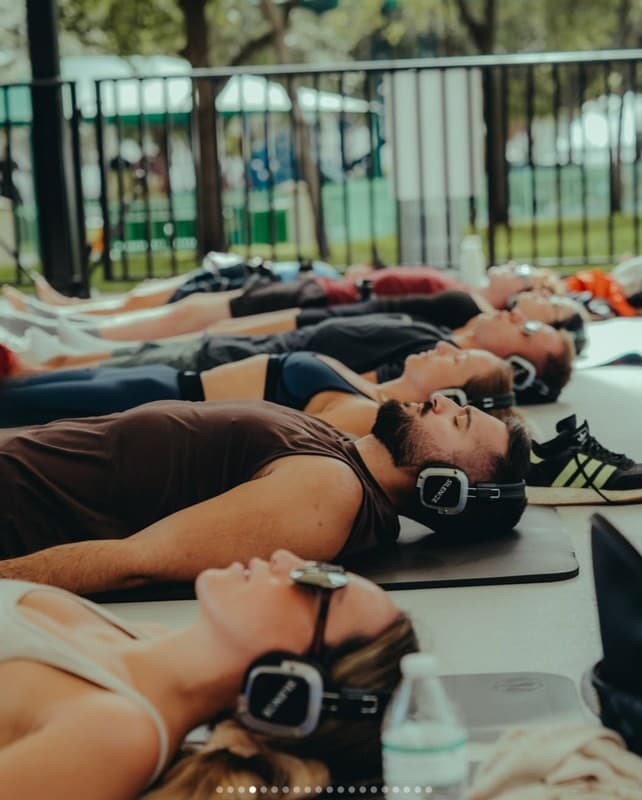
What is event-led volunteering?
Event-led volunteering builds the ask around a specific, dated, self-contained occasion rather than around an ongoing role. The offer is a morning with a defined start and finish, usually with a social or cultural component, and no expectation of anything beyond that day.
The distinction is not about what the volunteers do. It is about the shape of the ask.
A traditional volunteer programme advertises a role: a commitment, often open-ended, described in terms of what the organisation needs. An event-led approach advertises an occasion: a date, a place, a duration, and a reason someone might want to be there for its own sake.
In practice that means the event has to be genuinely worth attending. Music, a group workout, food, a talk, a chance to be somewhere at sunrise with a few hundred other people. The volunteering happens inside the event rather than being the sole reason for it.
This can sound like a marketing trick, and it is not, quite. It is an acknowledgement that the barrier to first-time participation is almost never a shortage of goodwill.
Why do people not sign up for ongoing roles?
Because an open-ended commitment to an unfamiliar organisation is a high-risk decision. The person cannot estimate the time cost, does not know whether they will be any good at it, does not know who else will be there, and cannot tell how hard it will be to stop.
Every one of those unknowns is a reason to defer, and deferring is free. This is why stated interest converts to actual attendance so poorly.
Uncertain duration is the largest barrier. A role described as ongoing has no visible exit, and most people will not open a commitment they cannot see the end of, however much they support the cause.
Social uncertainty is close behind and is rarely accounted for. Turning up alone to a group of people who already know each other is uncomfortable for a large share of the population, and organisations that have been running for years tend to forget how their own regulars look from outside.
Competence uncertainty matters too. People avoid situations where they might be visibly bad at something. Picking litter off a beach has the significant advantage of requiring no skill anyone is worried about lacking.
An event answers all three at once. It ends at a stated time, a good share of the people arriving are also arriving for the first time, and the task is obvious on sight.
Why does a fixed end time matter so much?
Because it converts an open-ended request into a bounded one, which is an entirely different decision. A person can weigh two hours on a Saturday against everything else on that Saturday. They cannot weigh an unbounded commitment against anything, so they postpone it indefinitely.
This is the least glamorous point in this article and probably the most useful one.
A stated finish time does more work than it appears to. It lets someone plan the rest of their day around attending, which turns the event from a replacement for their Saturday into an addition to it.
It also protects the experience. Events that run long produce people who leave early feeling awkward, or who stay resentfully. Both damage the likelihood of a return far more than a shorter event would have.
The related discipline is starting on time. A group that stands around for forty minutes waiting for stragglers has taught everyone present that the stated time is not real, and next time they will arrive later, which makes it worse.
Finishing slightly early is genuinely underrated. People leave with the sense that it was easier than expected, which is precisely the impression that produces a second attendance.
Why do cultural events reach people that appeals do not?
Because they reach people through an existing interest rather than through an existing concern. Someone who would never search for a volunteering opportunity will happily attend something their friends are going to, and the environmental purpose becomes part of the experience rather than the price of entry.
Conventional recruitment reaches people who are already looking. That population is small, already heavily solicited, and mostly already volunteering somewhere else.
Attaching the work to music, movement, food or art reaches a different population entirely: people whose interest in the ocean is real but latent, and who were never going to encounter a volunteer sign-up form.
It also changes who brings whom. People invite friends to things they expect to enjoy, and they do not generally invite friends to things they expect to be worthy. Word of mouth through existing social networks is the single most effective recruitment channel available to a small organisation, and it only activates if the event is something a person is happy to be seen inviting others to.
There is a legitimate objection here, which is that this risks making the environmental purpose decorative. The answer is that the work has to be real. An event where the cleanup is a photo opportunity attached to a party will be recognised as exactly that, and it deserves to be.
How do first-timers become regulars?
By being asked again, specifically and soon, for something equally bounded. Retention comes from a sequence of low-commitment events rather than from converting a first-timer into a committed volunteer in one step. Any escalation should be gradual and always optional.
The common failure is treating a first attendance as a lead to be converted. Someone who came to one morning is not ready to be asked for a monthly commitment, and being asked can make them less likely to return rather than more.
What works is a next date: concrete, soon, and the same size as the thing they already did. The second attendance is a much smaller decision than the first, and the third is smaller again.
Roles, when they come, should emerge from participation rather than be offered as a promotion. Somebody who has attended four times and started helping with the briefing is already doing the role, and naming it is a formality rather than a new ask.
Keeping in touch matters, and the channel matters more than the message. A group chat where the next date appears alongside ordinary conversation performs very differently from a newsletter, because it is a place people already are rather than a place they have to remember to visit.
Not everyone becomes a regular, and that is fine. A large number of people who each attend once or twice is a legitimate model, and it puts the problem in front of far more people than a small dedicated core ever will.
What are the trade-offs of the event-led model?
It costs more per event, it demands organising capacity that is different from subject expertise, and a large group of first-timers is less efficient at the actual work than a small experienced one. It buys reach and visibility, and organisations should be clear about which they need.
The honest accounting matters here, because event-led organising is fashionable and its costs are real.
Events cost money. Permits, shade, water, gear for people who bring none, and whatever the cultural component involves. A small group of regulars needs almost none of that.
Efficiency per volunteer-hour is lower. Fifty first-timers who need a briefing, supervision and equipment will not out-collect fifteen experienced people per hour of organiser attention. If the only goal is material removed, the event model is not the efficient answer.
It also demands skills that are not environmental: logistics, communications, and the ability to run a good event. Organisations strong on subject knowledge and weak on operations tend to struggle with this model specifically.
What it buys is reach. More people exposed to the problem directly, a wider pool from which regulars eventually emerge, visibility that supports funding and partnerships, and the slow normalisation of the activity in a city's social life. Whether that is worth the cost depends on whether the organisation's real bottleneck is capacity or awareness.
Frequently Asked Questions
Does event-led volunteering attract people who are not serious?
It attracts people whose interest has not yet been tested, which is a different thing. Some will do one event and never return, and that is a normal, acceptable outcome. Filtering for pre-existing commitment at the door guarantees you only ever reach people who were already committed.
Is a small committed group not more effective?
Per hour of organiser effort, usually yes. The event model optimises for reach rather than throughput. Which one is right depends on whether the binding constraint is the amount of work that gets done or the number of people who ever encounter the problem first hand.
How far in advance should an event be announced?
Far enough that people can put it in a calendar, close enough that they have not forgotten. A couple of weeks with a reminder in the final few days is a common shape. Announcing months ahead without reminders produces sign-ups that never become attendance.
What is the biggest single driver of a second attendance?
Whether the first one started and ended on time and felt organised. People forgive a great deal, but they do not return to something that felt chaotic or that took considerably longer than they were told it would.
Sources
- Ocean Conservancy, International Coastal Cleanup
- Surfrider Foundation, Programs
Written by
The Humanity Cares team
Humanity Cares is a Miami 501(c)(3) that runs beach cleanups and cultural activations. This is general background reading on a subject the foundation works in. It describes no specific Humanity Cares event, and every figure in it is either attributed to a named organisation or left unstated.
Keep Reading

Field guide
How to Run a Beach Cleanup Safely
Permissions, the safety briefing, what volunteers should never pick up, how to handle sharps and wildlife, and how to close out a cleanup properly. Written for whoever is organising, not attending.
8 min read
Field guide
What to Bring to a Beach Cleanup
The short list of things that make a two-hour cleanup comfortable and safe, the gear that sounds useful and is not, and what organisers should supply rather than expect volunteers to bring.
7 min read
Field guide
Sun and Heat Safety for a Morning on an Open Beach
A shoreline has no shade, reflects light off sand and water, and gets hot fast. What that means for timing, clothing, water and knowing when to stop.
8 min read